Singer Script: A Friendly Modern Font for Crafters and Sellers
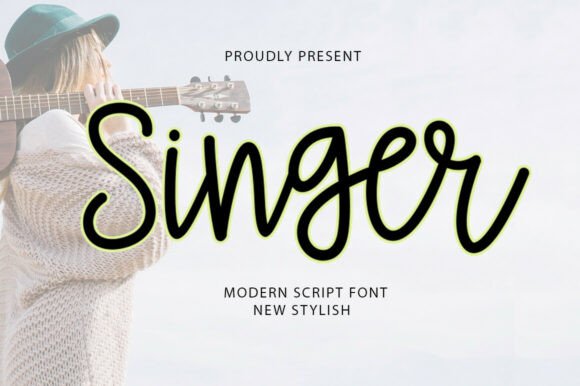
There is something quietly magical about watching letters sweep across a fresh sheet of cardstock, each curve carrying just enough personality to stop someone mid-scroll. That is exactly what happens when Singer Script lands on a project. It feels less like choosing a font and more like finding the handwriting you always wished you had—confident, warm, and effortlessly stylish. The thick, playful strokes and soft, rounded outline give it a bold presence, but the smooth curves and natural flow keep it approachable rather than formal. For anyone who makes physical products or sells printable designs, this balance is gold.
What sets Singer Script apart from other script fonts is the way its strokes swell gently without feeling heavy. The letters dance across a baseline with a friendly bounce, and the slightly softened edges take away any sharpness that can make a handwritten font feel cold or rushed. It reads like a modern script that belongs on a boutique shelf tag, not a dusty wedding album from decades ago. The elegant handwritten look feels purposeful without being precious, making it versatile enough for everything from a child's birthday invitation to an upscale candle label.
The Handmade Appeal of a Playful Script Typeface
Walk through any craft fair or scroll through a popular Etsy shop, and you will notice a pattern. The products that catch your eye and linger in your memory usually share one trait: their typography feels intentional. A beautifully chosen script font can make a simple kraft paper tag look like a considered design choice instead of an afterthought. Singer Script leans into that handmade aesthetic without sacrificing legibility. The natural flow between letters mimics true hand lettering, and the soft outline adds a subtle dimensionality that prints beautifully on textured paper, glossy labels, and matte sticker sheets alike.
For crafters who sell at markets or run online shops, first impressions happen fast. A product with poorly chosen or generic typography can blend into the background noise of a crowded feed. But a label, sticker, or card that uses a display font with real character stops the scroll. Singer Script has that stopping power because it feels personal. Customers pick it up, tilt their heads, and often ask, "Did you hand-letter this?" That reaction alone can turn a browser into a buyer.
Where Singer Script Shines in Real Product Projects
Let me walk you through a typical morning in my craft room. I am prepping a batch of soy candle jars, printing wedding invitation suites, and cutting vinyl decals for welcome signs. Three completely different product lines, yet I keep circling back to the same typeface. Singer Script handles all three with surprising ease.
For the candle jars, I use it as the primary scent name on round labels. A clean sans serif font underneath carries the weight of the smaller details—ingredients, weight, burn time—while Singer Script takes center stage with words like "Vanilla Oak" or "Wildflower Linen." The thick strokes hold up well when printed at around 18 to 24 points, even on slightly textured label paper. Customers often comment that the labels feel luxurious, and I credit the typography for at least half of that perception.
Wedding invitation suites demand something that feels special but remains readable for names, dates, and venue details. I set the couple's names in a slightly larger size of Singer Script, letting the swashes and alternates add that bespoke feel. Below the names, a simple serif font handles the body text, creating a timeless pairing that clients consistently love. The contrast between the expressive script and the restrained serif gives the suite a polished, professional finish without requiring hours of custom calligraphy work.
For vinyl welcome signs, I let Singer Script run large and proud. The bold strokes weed cleanly on my cutting machine, and the soft outline means there are fewer tiny, fragile details to worry about during transfer. I have cut it in adhesive vinyl, heat transfer vinyl, and even stencil material for painted wood signs. Each time, it holds its shape and reads clearly from across a room. That is not something every handwritten font can claim.
Building a Cohesive Brand With One Reliable Script
Consistency matters more than most new sellers realize. When your product photos, packaging, thank-you cards, and social media graphics all share a unified typographic voice, customers begin to recognize your brand before they even see your logo. I made the decision early on to anchor my shop's visual identity around a small handful of reliable typefaces, and Singer Script became the star of that lineup almost immediately.
It shows up on my hang tags, my product labels, my shop banner, and even the header text on my printable planner pages. Each touchpoint reinforces the same warm, approachable feeling. The playful strokes telegraph creativity and care, while the bold weight keeps everything grounded and professional. Whether a customer opens a shipped package or downloads a printable file, the experience feels cohesive. That consistency builds trust, and trust builds repeat sales.
Emotionally, Singer Script does something interesting. It evokes a sense of handcrafted authenticity without looking messy. The thick, rounded strokes feel almost hug-like—inviting and soft—which works beautifully for products aimed at celebrations, self-care, home décor, and gift-giving. A bath soak label, a baby shower favor tag, a holiday cookie box topper, a motivational wall art print—each one benefits from that same gentle, human quality that no geometric display font can replicate.
Readability, Size, and Cutting Machine Success
Let me be honest about something many font descriptions gloss over. Not every beautiful script font performs well at small sizes or on intricate cuts. I learned that lesson the hard way with a delicate calligraphy typeface that turned into a shredded mess on my cutting mat. Singer Script avoids that pitfall because its strokes are substantial without being clunky.
For printed projects like sticker sheets, favor tags, and card inserts, I find it remains crisp and legible down to about 14 points, depending on the paper and printer settings. On glossy label stock, the soft outline helps the letters stay distinct rather than bleeding together. For Cricut and Silhouette users, I recommend test-cutting at different sizes before committing to a full run. I typically set my blade depth and pressure based on the average stroke width, and because Singer Script maintains fairly consistent thickness, the cut settings rarely need tweaking mid-project. The gentle curves weed cleanly, and I have not experienced the frustrating tearing that often happens around thin connectors or overly tight loops.
When it comes to mockup previews, Singer Script photographs well. The bold presence reads clearly even in thumbnail images, which matters enormously for online listings. Customers browsing on mobile devices need to be able to see your product text at a glance. A wispy, ultra-thin script might disappear. This one holds its ground.
Examples That Translate to Sales
I want to share a few concrete examples of how I have used or seen Singer Script in the wild, because real-world context always helps more than abstract praise. A friend who runs a small bakery uses it for her cookie packaging labels. She prints the flavor names in Singer Script on round stickers and places them on clear cellophane bags. The contrast between the transparent bag, the rustic cookie, and the friendly script label creates an irresistible product presentation. She sells out at every market.
Another maker I know designs printable wall art for nurseries and playrooms. She sets short, encouraging phrases like "You Are So Loved" or "Dream Big, Little One" in Singer Script, often in a warm blush or soft terracotta color. The thick strokes fill the frame beautifully without overwhelming the simple line-art illustrations she pairs them with. Those prints are among her bestsellers, and she attributes much of their success to the approachable, modern feel of the typography.
Seasonal craft designs also benefit enormously. I have used Singer Script on Halloween treat bag toppers, Christmas gift tags, Valentine's Day card inserts, and Easter brunch place cards. The font adapts because its personality is warm and celebratory rather than tied to a specific holiday theme. A simple color change and a thoughtful word choice make it feel fresh for any occasion.
For boutique clothing tags, mini tote bag labels, and personalized product stamps, the font adds a layer of perceived value. It suggests that care went into the details, and customers are willing to pay more for that impression. I have seen small shops raise their price points after a rebrand that included better typography, and Singer Script frequently plays a supporting or starring role in those transformations.
Font Pairing Ideas That Work
Pairing fonts well can elevate a design from homemade to professional. With Singer Script, I tend to follow one reliable principle: let the script be the star, and choose a supporting typeface that stays out of the way. A clean, neutral sans serif font with a slightly condensed structure works beautifully beneath the flowing curves of the script. The contrast in style creates visual interest while the restraint in the secondary font keeps the design from feeling chaotic.
For more traditional or romantic projects, a classic serif font complements the handwritten warmth of Singer Script. The timeless structure of a serif body text anchors the playful energy of the script heading. I often use this combination for wedding stationery, formal event invitations, and keepsake prints. The pairing feels intentional and balanced.
When I need a bolder contrast for product packaging or display signage, I sometimes pair Singer Script with a sturdy, uppercase display font. The script handles the decorative headline while the display typeface manages short bursts of information like product names or sale announcements. This works especially well for market stall signage and social media graphics where you need to grab attention quickly.
Experimenting with weight and spacing helps too. Because Singer Script carries a naturally bold presence, I often add extra letter spacing to the supporting typeface to create breathing room. The result feels airy and intentional without sacrificing readability.
Checking Your Font Files and Features
Before you dive into designing, take a moment to explore everything your Singer Script download includes. Many premium font files come with alternates, ligatures, and swashes that can add variety and customization to your projects. Open the character map or glyph panel in your design software and scroll through. You might find alternate letterforms, decorative swashes for the beginnings or ends of words, and ligatures that connect certain letter pairs more gracefully. These extras can make a single wordmark look entirely custom.
File formats matter too, especially if you switch between different design programs. Most crafters work with OTF or TTF files, and both typically serve well in Cricut Design Space, Silhouette Studio, Adobe Illustrator, Canva, and Procreate. Check whether your download includes both formats. If the font description mentions multilingual support, test a few words with accented characters to make sure they render correctly. This becomes crucial if you sell internationally or design for clients whose names include special characters.
I also recommend printing a quick test sheet whenever I install a new typeface. I type out common phrases, names, and numeral sequences at various sizes and then print them on the paper stocks I use most often. This reveals any spacing issues, printing quirks, or readability concerns before they derail a paid project. Singer Script consistently passes that test, which is why it stays in my permanent font rotation.
Commercial Licensing and Selling Your Work
This part matters deeply, so let me address it clearly. If you plan to sell physical products, printed designs, digital downloads, templates, or any items that incorporate Singer Script, you need to confirm that your font license covers commercial use. Most commercial font licenses allow you to create and sell physical goods and printed products without any additional fees. That covers candles, stickers, cards, shirts, mugs, tote bags, signs, and similar handmade items.
For digital products and SVG-style designs, the rules can vary. Some licenses restrict the resale of flattened or editable text designs, while others require an extended license for alphabet sets, digital stamps, or templates where the customer can access and manipulate the letterforms. Read the specific terms that come with your Singer Script purchase. If you design logo templates or branding kits for clients, check whether the license allows trademark use. Taking a few minutes to understand these details protects your business and respects the type designer's work.
I keep a simple folder on my computer with a copy of each font license file. When I launch a new product line that relies heavily on a particular creative font, I reference that license to make sure I am covered. Peace of mind matters as much as beautiful design, and proper licensing gives me both.
A Reliable Workhorse With Personality
Some fonts look stunning in specimen images but fall apart under real production conditions. Others perform technically well but lack the warmth that makes a product feel special. Singer Script occupies a rare middle ground where practicality and charm coexist. The smooth curves, bold presence, and soft outline make it adaptable to countless craft and product applications. The friendly, modern handwritten font aesthetic resonates with customers who crave authenticity in a mass-produced world.
I reach for it whenever I need a typeface that feels like a trusted tool rather than a fleeting trend. It handles the demands of cutting machines and small-format printing while adding genuine emotional warmth to every project it touches. For candle labels and birthday invitations, farmhouse signs and wedding welcome boards, boutique tags and holiday packaging, printable wall art and digital planners, Singer Script delivers the kind of practical beauty that crafters, sellers, and product creators build businesses around.